
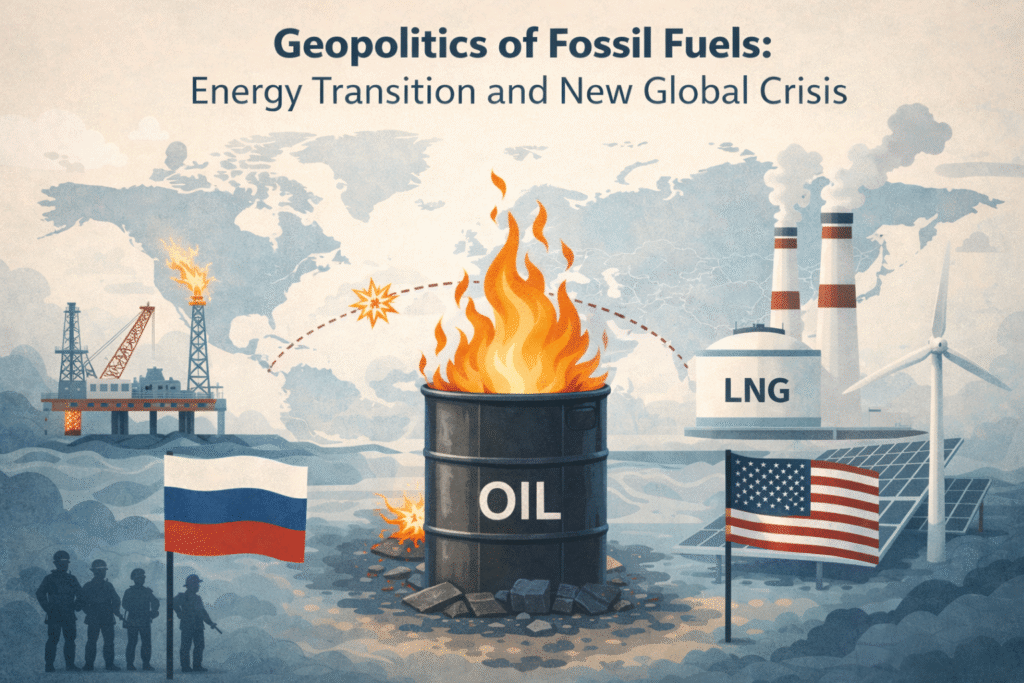
In an increasingly unstable global context, fossil fuels continue to play a crucial role in global geopolitics. This is one of the key points that emerged during the seminar held by Pier Paolo Raimondi, Research Fellow at EUI and Senior Research Fellow at IAI, dedicated to the geopolitics of fossil fuels, with its trends, players and crises.
Despite the increased attention to energy transition, oil and gas today remain the main source of energy at a global level, influencing political, economic and strategic balances.
Energy and development: a structural link
“Energy is a crucial driver of social, technological and economic development”, but researchers have observed a direct correlation: Rich countries with low levels of energy consumption don’t exist.
Mr Raimondi reinforced this idea even more, confirming that: “there is no development without energy”.
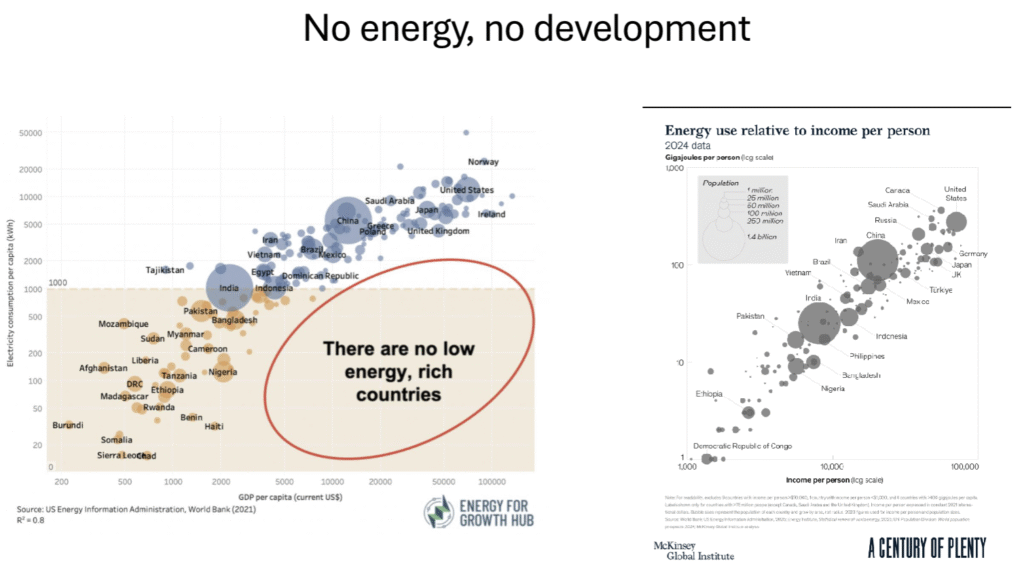
This implies a structural tension:
- on one hand, the need to increase access to energy
- on the other hand, the urgency to decrease greenhouse gas emissions.
That means that the challenge of energy transition is not to reduce consumption, but to change the sources of energy.
The “energy trilemma” and governments’ decisions
Mr Raimondi introduced the concept of “energy trilemma”, represented by three key dimensions of energy policy:
- Security of supply
- Energy access to all (Equity)
- Environmental Sustainability (in particular climate change)
The key point is that these three objectives cannot be reached all at the same time in the short-term.
As highlighted during the seminar, the energy crisis of 2022 brought back the attention on topics like security and prices, after years where the focus was only on sustainability.
In other words: energy priorities change based on the geopolitical context.
Energy transition: a political process, not just economic
“Today’s energy transition seeks to transform energy supply in a 30-year range”.
This transformation is “policy-driven”, so driven by public policies, not just by the market.
It’s a key difference compared to the past, because:
- the previous energy transitions were driven by economic efficiency
- the current one is driven by the necessity to reduce emissions
Additionally, this type of new transition is defined as a process “by subtraction”:
For the very first time, we are trying to eliminate some energy sources (fossil fuels) instead of adding new ones.
However, energy history teaches us that “Energy transitions take time. Each major energy source that has dominated world supply has taken 50 to 60 years to rise to the top spot”.
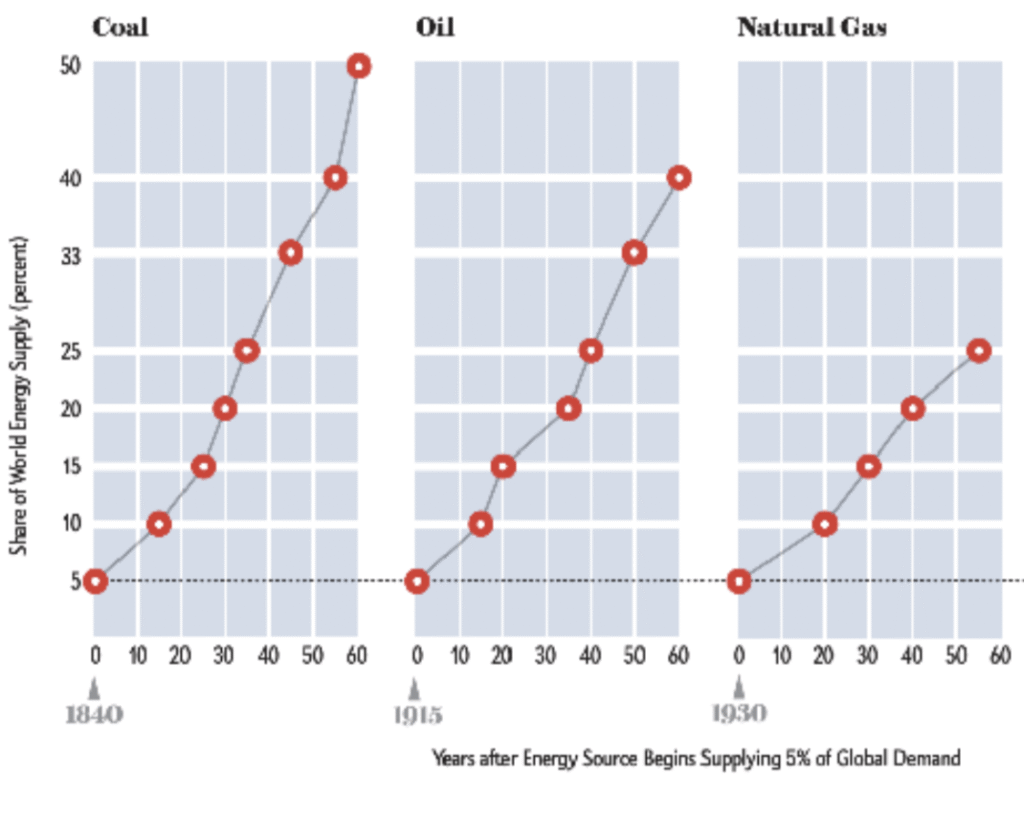
Source: V. Smil, 2014
The strategic role of oil: from 1970s crises until today
Oil remains the most strategic source of energy, with a central role already starting from World War I.
A key moment is represented by the 1973s crisis, when the Arab oil embargo shook the global energy market:
- reshaping global geopolitics
- drastically increasing prices
- transforming energy into a political issue
As explained by Mr Raimondi during the seminar, this crisis was not just an energy crisis, but also geopolitical and economic.
From that moment on, energy became a fixed part of Governments’ strategic agenda.
The US shale oil and gas revolution
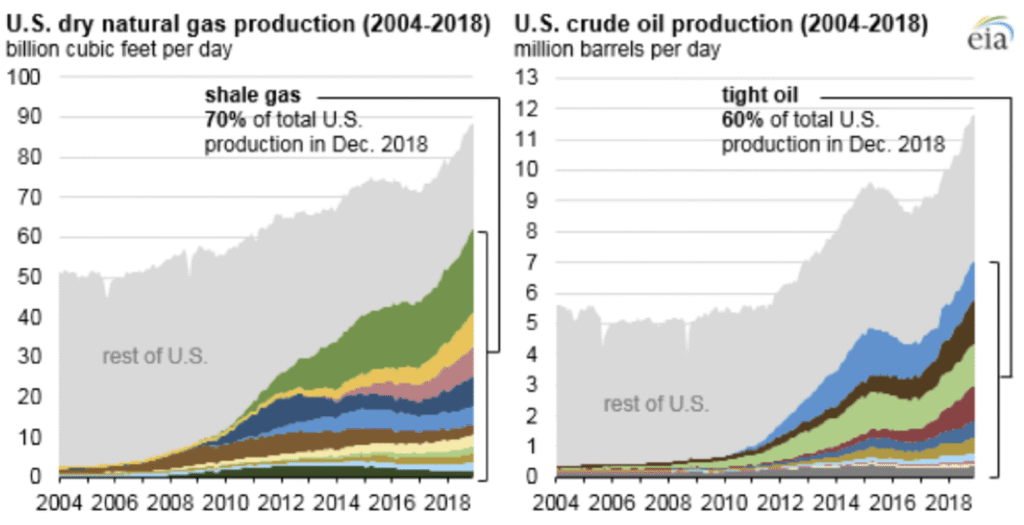
Another important element is the “shale revolution” in the U.S.
Thanks to the development of new technologies, the U.S. became:
- a top producer of oil
- one of the main exporters of gas (LNG)
This led to important consequences, showing how energy continues to reshape global powers’ dynamics:
- higher pressure on exporters, like Russia (gas) and Saudi Arabia (oil)
- lower energy prices (between 2016 and 2020)
- more assertive foreign policy (sanctions) and a shift in the geographical focus of the US foreign policy (“Pivot to Asia”).
Producer countries between revenues and transitions
Producer countries of hydrocarbons, particularly MENA, are currently in a complex position.
- On one hand, their economy depends heavily on energy revenues.
- On the other hand, the energy transition threatens this structure.
The main risks linked to this are:
- unused assets (stranded assets)
- loss of potential future revenues
- economic and social instability
Another issue is related to internal consumption. Low energy prices encourage inefficiency in consumption, with related economic and environmental consequences.
Mr Raimondi left us with an emblematic quote:
“In one generation we went from riding camels to riding Cadillacs […] I fear the next generation will be riding camels again”.
The new energy crisis of 2026
The seminar ends with an analysis of the recent energy crisis, linked to tensions in the Strait of Hormuz.
This crisis highlights once again the vulnerability of the global energy system:
- 25% of global oil trade flows via this chokepoint
- almost 20% of global LNG trade is involved
The seminar closes with an interesting reflection: the birth of a new division in the international system, between
- Petrostates, that base their power on fossil fuels
- Electrostates, focused on clean technologies
Europe sits in-between, balancing sustainability, energy security and economic competitiveness.
In conclusion, despite the energy transition, fossil fuels remain central in global geopolitics.
You may also enjoy reading…